




























































































As artificial intelligence workloads, particularly Large Language Model (LLM) training and real-time inference, push traditional data center infrastructures to their breaking point, the underlying network architecture must evolve. This guide bridges the gap between complex network engineering and strategic procurement, offering actionable insights for both technical decision-makers (CTOs, Infra Leads) and financial planners (CFOs, Procurement Managers) looking to upgrade their facilities in 2026.
Table of Contents
- Part 1: The Technical Mandate - Spine-Leaf for AI Performance
- Part 2: Strategic Procurement & TCO Optimization
- Part 3: Localized Trust - Navigating Singapore's Data Center Compliance

Part 1: The Technical Mandate - Spine-Leaf for AI Performance (For CTOs & Infra Leads)
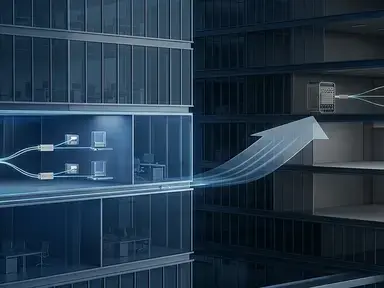
Traditional three-tier network architectures (Access, Aggregation, Core) were designed primarily for north-south traffic, which inherently creates bottlenecks and high latency for the massive east-west server-to-server data flows required by modern AI workloads. Spine-Leaf architecture, based on a multi-stage Clos network topology, resolves this limitation by flattening the network.
In this design:
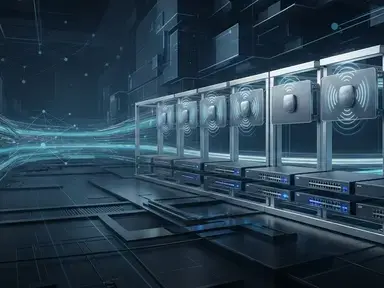
- Leaf switches connect directly to servers, storage devices, and GPU clusters, aggregating their traffic.
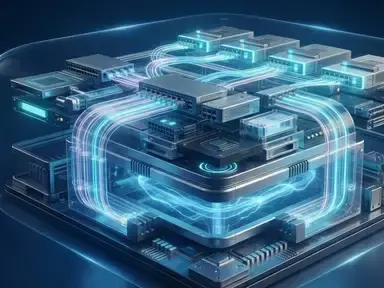
- Spine switches form the core backbone, interconnecting all Leaf switches in a full-mesh structure where every Leaf connects to every Spine.
Performance Advantages over 3-Tier Architecture:
- Reduces network hops, delivering predictable performance, balanced traffic distribution, and a non-blocking fabric with low oversubscription ratios.
- Critical for massive GPU and CPU clusters requiring ultra-high-speed, low-latency interconnections.
- Supports RDMA over Converged Ethernet (RoCEv2) for direct GPU memory access.
- Priority-based Flow Control (PFC) and Explicit Congestion Notification (ECN) create a lossless network fabric during AI training.
Spine-Leaf Hardware & Performance Reference Table:
| Category | Model Example | Typical Role | Port Density & Speed | Key AI Benefit |
| Leaf | Mellanox MSN2410 / MSN2700 | Server/GPU Connectivity | High-density 25G/100G | Low-latency endpoint access, PoE/Power efficient |
| Spine | Mellanox MSN4600-CS2FC | Core Exchange | High-density 200G/400G | Non-blocking throughput, massive bandwidth |
For teams evaluating high-throughput Leaf/Spine switches, check our in-stock Mellanox models with 7–10 day delivery to plan your AI data center rollout. Router-switch
Part 2: Strategic Procurement & TCO Optimization (For CFOs & Procurement Managers)
For business leaders, translating complex network requirements into a sustainable financial strategy means evaluating the Total Cost of Ownership (TCO)—which encompasses upfront hardware costs, ongoing power consumption, and maintenance overhead.
- Spine-Leaf architecture enables phased deployment, scaling capacity incrementally without a massive, one-time overhaul.
- Strict CapEx control while matching network capacity to current business demands.
The 2026 Supply Chain Context:
- Average lead times for core Leaf/Spine switch models have stretched due to surging AI demand.
- High-speed Mellanox IB switches and 400G/800G infrastructure are in high demand.
- Using in-stock alternatives like Mellanox MSN2700, MSN2410, MSN4600-CS2FC bypasses supply chain bottlenecks.
Leverage our IT-Price tool to instantly check live inventory and generate quotes, helping finance teams plan phased purchases without project delays. IT-Price
Part 3: Localized Trust - Navigating Singapore's Data Center Compliance
For Singapore operations, upgrading network infrastructure is a regulatory requirement due to land, power, and carbon constraints.
Strict PUE Mandates
- IMDA & BCA Green Mark certification for data centers (from March 2025).
- Facilities aiming for Platinum must achieve PUE of 1.39 at 25% IT load, moving toward baseline PUE 1.2.
- Upgrading Spine-Leaf switches lowers IT energy draw, reduces cooling load, improves PUE.
Government Subsidies (EEG)
- IMDA’s Energy Efficiency Grant subsidizes up to 70% for SMEs and 30% for non-SMEs for pre-approved energy-efficient IT/network equipment.
Thermal Resilience for AI
- AI server racks reach 40kW–100kW per rack.
- Upgrading network hardware aligns with Singapore Tropical Data Centre standard (SS 697:2023).
- IT equipment can safely operate up to 35°C, reducing air conditioning load and achieving optimal power savings.

Expertise Builds Trust
20+ Years • 200+ Countries • 21500+ Customers/Projects
CCIE · JNCIE · NSE7 · ACDX · HPE Master ASE · Dell Server/AI Expert


