






















































































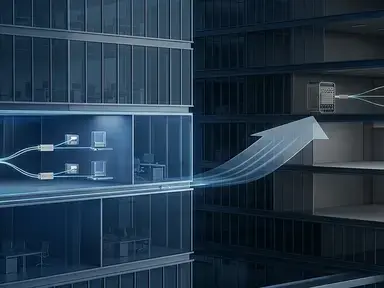














In modern data center environments, infrastructure reliability is more important than network feature complexity. As enterprises migrate toward cloud-native platforms, automated infrastructure management, and distributed application architectures, Out-of-Band (OOB) networks have become a critical component of operational resilience. The primary purpose of an OOB network is simple: Provide independent management access during production network failures. When OOB networks fail, infrastructure teams lose the ability to recover critical systems remotely, turning logical outages into physical data center incidents.
Table of Contents
- Part 1: Why Out-of-Band Networks Must Stay Truly Out-of-Band
- Part 2: The Two Biggest OOB Design Mistakes
- Part 3: Core Principles of Practical OOB Network Design
- Part 4: OOB Fabric Topology Design
- Part 5: Server Management Networks
- Part 6: Security and Emergency Access Design
- Part 7: Procurement Strategy for Data Center Infrastructure
- FAQ

Part 1: Why Out-of-Band Networks Must Stay Truly Out-of-Band
OOB networks act as disaster recovery communication channels for infrastructure management. They are typically used for:
- Switch and router management
- Server firmware recovery
- Console access troubleshooting
- Infrastructure monitoring
If OOB connectivity depends on production network availability, the entire recovery strategy becomes unreliable. True OOB network design requires:
- Physical network isolation
- Independent routing paths
- Dedicated security access policies
Many enterprise teams discover too late that poorly designed management networks can significantly increase downtime recovery costs.
Part 2: The Two Biggest OOB Design Mistakes
In-Band Management Risks
Some organizations attempt to reduce cost by using production infrastructure to carry management traffic through VLAN or VRF segmentation. However, logical isolation is not enough.
If production infrastructure experiences routing failures, spanning tree loops, or hardware failures, management access may disappear completely.
This can transform simple remote maintenance tasks into emergency site visits.
Over-Engineering OOB Networks with VXLAN
To avoid in-band management risks, some teams overcompensate by building OOB networks using advanced overlay fabrics such as VXLAN and EVPN.
While these technologies are powerful in production environments, they introduce unnecessary complexity in management networks.
OOB networks should function like infrastructure safety systems rather than high-performance data transport fabrics.
Part 3: Core Principles of Practical OOB Network Design
For Cloud Platform Engineers and MSP teams, the design priorities for OOB are clear: Recoverability and Operational Simplicity must outweigh future high-tech expansion.
- True Physical Isolation
- Keep It Simple Network Design
- Secure Independent Access
Example CLI command to verify software version:
switch# show versionPart 4: OOB Fabric Topology Design
Recommended hardware platforms include enterprise networking switches.
Example enterprise platforms:
- Cisco official site
- Cisco Catalyst Switch Series
Global enterprises often prefer sourcing reliable data center networking hardware from trusted infrastructure suppliers that maintain ready-to-ship inventory. You can explore enterprise hardware procurement at: Router-Switch Enterprise Networking Hardware Inventory
Part 5: Server Management Networks
Common server management technologies include hardware BMC management interfaces.
- Hewlett Packard Enterprise iLO management systems
- Dell DRAC interfaces
- IPMI standards
Best practices include dedicated management subnets and strict access control policies.
Part 6: Security and Emergency Access Design
Recommended security mechanisms include:
- Zero-trust authentication models
- Multi-factor authentication
- Session audit logging
Many enterprises also deploy LTE-based backup console connectivity and emergency break-glass VPN access.
Part 7: Procurement Strategy for Data Center Infrastructure
Infrastructure procurement reliability is just as important as network design.
Enterprise teams often use pricing comparison platforms: IT-Price Network Hardware Pricing Tool
Global IT teams often rely on procurement partners that provide fast logistics and large enterprise hardware inventories.
FAQ
Q1.Why should OOB networks remain simple?
Because complexity increases failure domains and recovery difficulty during disaster events.
Q2.Should VXLAN be used for OOB networks?
Generally no. OOB networks prioritize reliability and deterministic behavior over advanced networking features.
Q3.What hardware is best for OOB switching?
Enterprise-grade 1G/10G switches with long lifecycle vendor support are typically sufficient.
Q4.Should BMC management be integrated with network OOB?
It depends on security policies, but strict segmentation is recommended.

Expertise Builds Trust
20+ Years • 200+ Countries • 21500+ Customers/Projects
CCIE · JNCIE · NSE7 · ACDX · HPE Master ASE · Dell Server/AI Expert