Solving Warehouse WiFi Coverage and Uptime IssuesDesign reliable warehouse WiFi coverage and uptime with warehouse wifi 6 ap, industrial wireless access points, and warehouse poe switches for racks and docks.
OLT Capacity Planning for GPON Access NetworksPlan OLT capacity for GPON OLT systems and EA5800 capacity planning, optimizing GPON split ratio and OLT uplink design for scalable fiber access.
Enterprise OLT Platform Selection for Fiber AccessDesign enterprise OLT platform strategy for GPON OLT platform, modular OLT chassis, and OLT service boards to scale passive optical LAN and XG-PON evolution.
Scale Data Center Networking Under Long Lead TimesScale data center networking faster under long lead times with data center spine switches, leaf spine data center designs and Cisco UCS fabric interconnects.
Tunnel Video Surveillance VLAN Stability over FiberDesign stable tunnel video surveillance VLANs using optical transport backbone and Arista fiber aggregation for resilient Huawei OptiX OSN CCTV networks.
Fiber vs Copper in Industrial Networks Design GuideCompare fiber vs copper in industrial ethernet, plan hybrid industrial fiber network designs, and select rugged ethernet switches and industrial SFP transceivers.
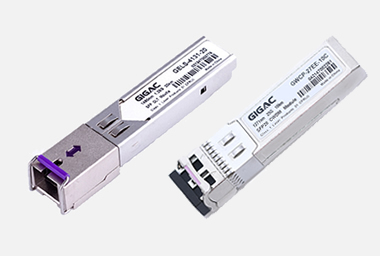
Fiber optic cables are the backbone of modern enterprise networks, data centers, and campus infrastructures. Selecting the correct fiber type is critical for ensuring optimal performance, signal integrity, and scalability. Among the most commonly used fiber types are single-mode fiber (SMF) and multimode fiber (MMF), often paired with 1310nm SFP modules for high-speed data transmission.
In this guide, we will explore the distinctions between 1300nm and 1310nm transceivers, examine the characteristics of SMF and MMF, review enterprise deployment scenarios, and provide best practices for compatibility and safety, helping network engineers make informed infrastructure decisions.
Understanding the differences between 1300nm and 1310nm SFP transceivers is essential for ensuring compatibility and performance in fiber optic deployments. Although the wavelengths are very close, their historical use and practical implications differ slightly.
Many 1310nm SFP modules operate over a wavelength range of 1260–1360nm, effectively covering the 1300nm specification. Historically, 1300nm transceivers were associated with multimode fiber (MMF) and older technologies such as 100BASE-FX, while 1310nm SFPs are typically used with single-mode fiber (SMF). In practice, testing equipment often cannot distinguish between 1300nm and 1310nm wavelengths, highlighting their functional similarity.
The 1310nm wavelength is chosen for its low chromatic dispersion and low attenuation, making it ideal for medium-distance links. Single-mode 1310nm fiber can transmit signals up to 40km, while multimode fiber at 1310nm generally supports distances up to 2km. Additionally, SMF transceivers employ lasers, requiring careful handling for eye safety, whereas MMF transceivers typically use LEDs, which are less hazardous.
This understanding of SFP characteristics naturally leads to examining the underlying fiber types, their performance, and optimal deployment scenarios.
Part 2: Single-Mode Fiber (SMF) vs Multimode Fiber (MMF)
Selecting the appropriate fiber type is critical for network efficiency, reliability, and cost-effectiveness. SMF and MMF differ in core diameter, light propagation, bandwidth, and attenuation, all of which influence the choice of SFP modules and fiber patch cables.
Core Diameter
The core diameter determines how light propagates and directly affects modal dispersion and maximum transmission distance.
Fiber Type
Core Diameter
Cladding Diameter
SMF
8–10.5 µm
125 µm
MMF
50 µm or 62.5 µm
125 µm
Larger core diameters in MMF allow multiple light modes to propagate, which can lead to modal dispersion and limit distance, while SMF supports single-mode propagation for higher fidelity over long distances.
Light Propagation and Sources
SMF carries a single light mode using lasers at 1310nm or 1550nm, making it suitable for long-distance, high-speed links. MMF propagates multiple light modes using LEDs or VCSELs, typically at 850nm or 1300nm, making it ideal for short-range connections within buildings or campuses.
Performance Characteristics
Understanding these differences allows network engineers to make informed decisions when selecting OM3 or OM4 multimode fibers, matching them with compatible SFP modules for reliable performance.
Part 3: Enterprise Deployment Scenarios
Choosing the right fiber type depends on distance, data rate, and the specific deployment environment. Matching fiber with the correct SFP module ensures optimal network performance and cost-efficiency.
Multimode Fiber (MMF) 10G/40G/100G Examples
MMF Type
Core Diameter
850nm Bandwidth
1300nm Bandwidth
10GbE Max Distance
40GbE Max Distance
100GbE Max Distance
OM1
62.5/125 µm
200 MHz·km
500 MHz·km
33 m
N/A
N/A
OM2
50/125 µm
500 MHz·km
500 MHz·km
82 m
N/A
N/A
OM3
50/125 µm
1500 MHz·km
500 MHz·km
300 m
100 m
70/100 m
OM4
50/125 µm
3500 MHz·km
500 MHz·km
550 m
150 m
150 m
OM5
50/125 µm
3500 MHz·km
500 MHz·km
550 m
150 m
150 m
Single-Mode Fiber (SMF) OS2 Example
Fiber Type
Core Diameter
Max Distance (10/40/100GbE)
SMF (OS2)
9/125 µm
10 km (LR) / 10 km (LR4)
In enterprise deployments, SMF is generally preferred for long-distance, high-speed links due to its low attenuation and minimal modal dispersion. MMF remains suitable for intra-building or campus backbones, where distances are shorter, and using compatible fiber patch cables and SFP modules ensures reliable performance.
Part 4: Compatibility and Best Practices
Ensuring proper compatibility and following best practices is essential for reliable fiber network operation. Single-mode and multimode fibers should not be directly mixed, as differences in core size can lead to optical loss and link failure.
Using 1310nm SFPs on MMF can work for short distances, but mode-conditioning patch cables are recommended for 62.5µ MMF to minimize signal loss. Additionally, safety precautions are important: SMF uses lasers, which can be hazardous, while MMF often uses LEDs.
For new installations, SMF is increasingly the preferred choice due to its support for higher speeds, longer distances, and lower long-term upgrade costs. Following these guidelines ensures that Cisco compatible fiber patch cables and 1310nm SFP modules operate efficiently and reliably.
FAQ
Q1: Can I use a 1310nm SFP on multimode fiber? Yes, for short distances up to 2km. Mode-conditioning patch cables are recommended for 62.5µ MMF to reduce loss.
Q2: How far can 1310nm SMF and MMF transmit? SMF: Up to 40 km. MMF: Typically 2 km.
Q3: Which fiber type is more future-proof for enterprise networks? Single-mode fiber, because it supports higher speeds and longer distances with lower upgrade costs.
Q4: What precautions should I take when handling transceivers? Treat all laser outputs as potentially harmful and follow proper safety procedures during installation or testing.