











































































































Enterprise storage refresh projects often begin with a simple problem: the SSD model currently in use is no longer available. It may have reached end-of-life, the manufacturer may have transitioned to a newer product line, or inventory may simply be depleted. The challenge for procurement teams is finding a replacement that is genuinely equivalent, not just similar in capacity.
Legacy SSD cross-referencing is not a straightforward task. Two drives with the same capacity, interface, and form factor can have very different endurance, performance, and compatibility characteristics. A replacement that works on paper may fail in practice because of firmware differences, power requirements, or platform validation status.
This article explains how to compare old and new enterprise SSDs safely, what specifications matter beyond capacity, and how to avoid the most common cross-referencing mistakes.
- Part 1: The short answer
- Part 2: Why legacy SSD replacement is complex
- Part 3: Key specifications to compare
- Part 4: Endurance and workload matching
- Part 5: Form factor and interface compatibility
- Part 6: Firmware and validation considerations
- Part 7: Common buyer mistakes
- FAQ
- Part 8: How to turn this into a buying decision
Part 1: The short answer
- Capacity alone is not enough to judge SSD equivalence. Endurance, performance, form factor, interface, and firmware all affect whether a replacement will work.
- Endurance is often the most overlooked specification. A newer SSD with the same capacity may have lower endurance, leading to earlier failure in write-heavy environments.
- Form factor and interface must match exactly. A 2.5-inch SATA drive cannot replace an M.2 NVMe drive, even if capacities are identical.
- Firmware and platform validation matter. Some servers require specific firmware versions or validated drive models. A generic equivalent may not be accepted.
- Use manufacturer cross-reference tools as a starting point, not the final answer. These tools suggest alternatives but do not guarantee compatibility with your specific server platform.
| Specification | Why it matters | Common mistake |
|---|---|---|
| Capacity | Basic storage requirement | Assuming same capacity means equivalence |
| Endurance (TBW/DWPD) | Lifespan under write workloads | Ignoring endurance in high-write environments |
| Form factor | Physical fit in server bay | Mixing 2.5-inch, M.2, and U.2 formats |
| Interface | Connection protocol and speed | Confusing SATA, SAS, and NVMe |
| Validation status | Server platform support | Using non-qualified drives in managed servers |
Part 2: Why legacy SSD replacement is complex
Product transitions and acquisitions
The enterprise SSD market has seen significant consolidation. Intel's SSD business was sold to SK Hynix and now operates under the Solidigm brand. Samsung and Micron have transitioned through multiple product generations with different naming conventions. A drive that was standard two years ago may now be available only through last-time-buy channels or not at all.
Multiple generations with similar names
Manufacturers often reuse model number prefixes across generations. A Samsung PM883 and PM893 may sound related, but they use different NAND technology, have different endurance ratings, and may not be interchangeable in all platforms. Buyers who assume generational compatibility based on naming often make costly errors.
Platform-specific validation
Major server vendors validate specific SSD models for their platforms. A drive that works in one generation of PowerEdge may not be supported in another, even if the physical connection is the same. Cross-referencing must include checking the target server's storage qualification list.
Part 3: Key specifications to compare
Capacity
Capacity is the starting point, not the endpoint. Match or exceed the original capacity, but recognize that usable capacity may vary due to overprovisioning. Some enterprise SSDs reserve additional space for wear leveling and error correction, so two drives with the same nominal capacity may have different usable space.
Endurance: TBW and DWPD
Total Bytes Written (TBW) and Drive Writes Per Day (DWPD) are the standard measures of SSD endurance. A replacement drive should meet or exceed the original drive's endurance rating. In write-heavy environments like databases and virtualization, lower endurance leads to premature failure and unplanned replacement.
Performance: sequential and random I/O
Compare read and write IOPS, as well as sequential throughput. A replacement drive that looks equivalent on capacity may have lower random write performance, which can bottleneck database and virtualization workloads.
Form factor
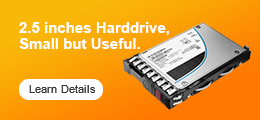
Common enterprise SSD form factors include 2.5-inch, M.2, and U.2. The replacement must match the original form factor to fit the server's drive bays or slots. Adapters exist but add complexity and potential compatibility issues.
Interface
SATA, SAS, and NVMe are not interchangeable. The replacement must use the same interface as the original. Mixing interfaces in the same RAID array or storage pool usually causes failures or forces the entire group to downclock to the slowest interface.
Part 4: Endurance and workload matching
Read-heavy vs write-heavy workloads
Read-heavy workloads like web servers and media streaming can tolerate lower endurance. Write-heavy workloads like databases, caching layers, and virtualization require higher DWPD ratings. Match the replacement drive's endurance to the workload, not just the original drive's spec.
Overprovisioning and wear leveling
Enterprise SSDs typically include more overprovisioning than consumer drives. This extends lifespan and maintains performance under heavy write loads. When cross-referencing, check whether the replacement drive has similar overprovisioning levels.
Temperature and power
Newer SSDs may have different thermal and power characteristics. If the server's cooling and power design is tightly constrained, a replacement with higher power draw may cause thermal throttling or reliability issues.
Part 5: Form factor and interface compatibility
Physical fit
The replacement drive must physically fit in the available bay or slot. M.2 drives come in different lengths. U.2 drives require specific cabling. 2.5-inch drives have standardized dimensions but may differ in thickness.
Connector type
SATA and SAS use similar physical connectors but different protocols. NVMe uses PCIe lanes and requires M-key or U.2 connectors. Verify that the server motherboard or backplane supports the replacement drive's connector type.
Hot-swap support
If the server relies on hot-swap capability, confirm that the replacement drive supports it. Not all SSDs with the right form factor support hot-swap operation.
Part 6: Firmware and validation considerations
Server vendor qualification lists
The most reliable compatibility source is the server vendor's published storage qualification list. Dell, HPE, Cisco, and others maintain lists of tested and validated SSDs for each server generation. If the replacement drive is not on the list, it may not be supported.
Firmware version requirements
Some server platforms require specific firmware versions on installed SSDs. A newer drive may ship with firmware that is too new or too old for the server's storage controller. Check firmware compatibility before approving the replacement.
RAID and storage controller compatibility
Not all SSDs work well with all RAID controllers. Some controllers have specific requirements for drive behavior, error handling, or command sets. Cross-reference the replacement drive with the RAID controller's compatibility list.
Part 7: Common buyer mistakes
Mistake 1: Matching capacity only
Capacity is the least distinctive specification. Two drives with the same capacity can differ dramatically in endurance, performance, and compatibility.
Mistake 2: Ignoring endurance in write-heavy environments
A lower-endurance replacement may fail within months in a database or virtualization host, creating downtime and emergency replacement costs.
Mistake 3: Mixing interfaces in the same array
SATA, SAS, and NVMe drives cannot be mixed in most RAID configurations. The replacement must match the existing interface type.
Mistake 4: Skipping the qualification list
The server vendor's qualification list is the definitive compatibility source. Skipping it risks ordering a drive that the platform does not support.
FAQ
How do I find a compatible replacement for a legacy enterprise SSD?
Start with the manufacturer's cross-reference tool, then validate the suggested replacement against your server vendor's qualification list. Check capacity, endurance, form factor, interface, and firmware compatibility.
Can I replace a SATA SSD with an NVMe SSD?
Only if the server supports NVMe in the same bay or slot. Most servers cannot mix SATA and NVMe in the same RAID array. Check the server's storage controller and backplane specifications.
What is more important: capacity or endurance?
For write-heavy workloads, endurance is often more important. A smaller drive with higher endurance may outlast and outperform a larger drive with low endurance in database or virtualization environments.
Do I need to match the exact brand when replacing an SSD?
Not necessarily, but the replacement must be qualified for your server platform. Some servers enforce qualified-part checks and will reject non-qualified drives regardless of brand.
Where can I check if an SSD is qualified for my server?
Check the server vendor's published storage compatibility matrix. Dell, HPE, Cisco, and other vendors maintain qualification lists by server generation and platform.
Part 8: How to turn this into a buying decision
Legacy SSD cross-referencing requires looking beyond capacity to endurance, performance, form factor, interface, and validation status. The safest approach is to treat manufacturer cross-reference tools as starting points, then validate the suggested replacement against the server vendor's qualification list and the workload's actual requirements.
Before approving any replacement, confirm that the drive matches or exceeds the original endurance rating, fits the physical bay, uses the correct interface, and is qualified for the target server platform. For write-heavy environments, endurance is often the deciding factor. For mixed or read-heavy workloads, performance and compatibility take priority.
If your project involves legacy SSD replacement and you need help cross-referencing old and new models, Router-Switch can help evaluate compatibility, check qualification status, and confirm availability. The fastest path to a safe replacement is matching the specifications first, then validating against the platform requirements.

Expertise Builds Trust
20+ Years • 200+ Countries • 21500+ Customers/Projects
CCIE · JNCIE · NSE7 · ACDX · HPE Master ASE · Dell Server/AI Expert