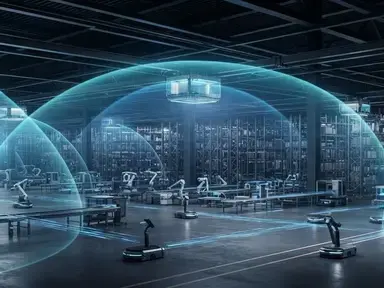
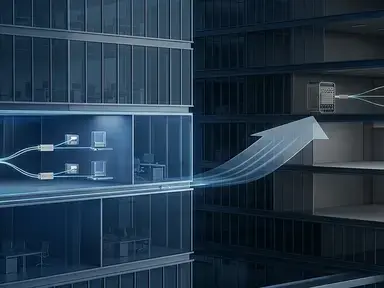
Solving Warehouse WiFi Coverage and Uptime IssuesDesign reliable warehouse WiFi coverage and uptime with warehouse wifi 6 ap, industrial wireless access points, and warehouse poe switches for racks and docks.
OLT Capacity Planning for GPON Access NetworksPlan OLT capacity for GPON OLT systems and EA5800 capacity planning, optimizing GPON split ratio and OLT uplink design for scalable fiber access.
Enterprise OLT Platform Selection for Fiber AccessDesign enterprise OLT platform strategy for GPON OLT platform, modular OLT chassis, and OLT service boards to scale passive optical LAN and XG-PON evolution.
Scale Data Center Networking Under Long Lead TimesScale data center networking faster under long lead times with data center spine switches, leaf spine data center designs and Cisco UCS fabric interconnects.
Tunnel Video Surveillance VLAN Stability over FiberDesign stable tunnel video surveillance VLANs using optical transport backbone and Arista fiber aggregation for resilient Huawei OptiX OSN CCTV networks.
Fiber vs Copper in Industrial Networks Design GuideCompare fiber vs copper in industrial ethernet, plan hybrid industrial fiber network designs, and select rugged ethernet switches and industrial SFP transceivers.
Retail enterprises operate under constant uptime pressure while managing limited IT resources and strict budget constraints. Traditional multi-vendor datacenter edge architectures—separate firewalls, routers, switches, and management platforms—often introduce operational complexity that small retail IT teams struggle to sustain.
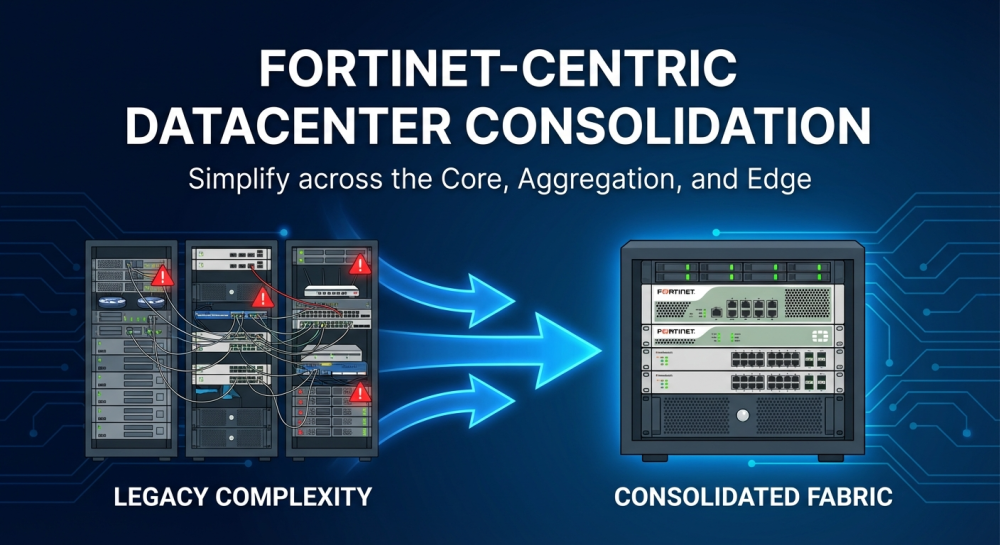
A Fortinet-centric consolidation strategy simplifies the datacenter edge by centralizing control around FortiGate firewalls and reducing architectural layers. This guide explains how to design a highly available, simplified edge architecture specifically optimized for retail environments.
Why Retail Networks Benefit from a Fortinet-Centric Architecture
Retail networks differ from large enterprise or hyperscale datacenters in several critical ways:
Limited on-site technical expertise
High outage sensitivity (POS, payment systems, inventory)
Strong demand for predictable and controlled costs
Large distributed footprints with centralized management needs
By centering the architecture around FortiGate Next-Generation Firewalls, organizations gain:
Technology convergence: Security, SD-WAN, and Layer 3 gateway functions in a single platform
Unified management: Centralized visibility through FortiManager and FortiAnalyzer
Reduced operational overhead: Fewer devices and fewer control planes
This consolidation model aligns well with lean IT operations while improving visibility and resilience.
Collapsed Core Design: Simplifying the Datacenter Edge
Traditional three-tier architectures (Core / Distribution / Access) are often unnecessary for retail datacenters. A collapsed core or two-tier design typically provides better efficiency and lower operational complexity.
Gateway Layer (Layer 3 Centralization)
A redundant FortiGate HA pair performs:
Inter-VLAN routing
Security inspection and policy enforcement
SD-WAN traffic steering
By centralizing Layer 3 at the firewall cluster, routing protocols such as OSPF or BGP are often eliminated from the access layer.
Access Layer (Layer 2 Simplification)
FortiSwitch units connect via FortiLink, operating as logical extensions of the FortiGate cluster. Switches primarily function at Layer 2, reducing routing complexity and troubleshooting scope.
High Availability Design Patterns for Retail
Active–Passive FortiGate HA (FGCP)
This is the most common and stable HA model for retail datacenters.
Session synchronization between units
Sub-second failover
Virtual IP and MAC takeover
The design prioritizes predictable recovery and operational simplicity over architectural sophistication.
SD-WAN for WAN Redundancy
Instead of relying solely on MPLS, retailers commonly deploy multiple internet circuits combined through SD-WAN.
Automatic link failover
Performance-based path selection
Optional LTE/5G backup connectivity
This model significantly improves uptime-to-cost efficiency.
Switch-Level Redundancy with MCLAG
To prevent a single switch failure from affecting server connectivity:
Deploy Multi-Chassis Link Aggregation (MCLAG)
Dual-home critical devices
Avoid spanning-tree dependency
What to Simplify — and What Must Remain
Elements to Simplify
HSRP/VRRP between switches when Layer 3 is centralized
Multi-vendor management consoles
Routing protocols at the access layer
Elements That Must Remain
Dual heartbeat links for HA clusters
Out-of-band management access
Redundant power supplies for critical devices
Simplification must be deliberate. Removing too much redundancy can create hidden failure domains.
Procurement and Deployment Considerations
A common challenge during consolidation projects is hardware availability and lead time. Retail expansion timelines are often aggressive, and delays in firewall or switching hardware can impact rollout schedules.
To mitigate deployment delays, some network teams source enterprise switching and routing hardware from specialized suppliers such as router-switch, particularly when:
OEM lead times are extended
Rapid regional expansion is required
Consistent hardware availability is critical
This approach allows organizations to execute their Fortinet-centric design without redesigning around supply chain constraints.
Conclusion
Fortinet-centric datacenter consolidation is not about architectural minimalism for its own sake. For retail enterprises, it is a strategy to reduce operational risk, centralize control, and maintain uptime with limited IT staff.
By collapsing layers, centralizing Layer 3 at the FortiGate HA cluster, and implementing practical redundancy where it matters most, retailers can build an edge architecture that is secure, resilient, and operationally sustainable.
Expertise Builds Trust
20+ Years • 200+ Countries • 21500+ Customers/Projects CCIE · JNCIE · NSE7 · ACDX · HPE Master ASE · Dell Server/AI Expert