















































































If your organization has around 200 users and is still running an older SonicWall NSA or TZ firewall, you’ve probably already noticed the signs.
Not in a report—but in daily operations:
- VPN users complaining about slow connections
- Video calls dropping during peak hours
- Performance collapsing the moment you enable SSL inspection
At this stage, you’re not casually “shopping for a new firewall.”
You’re dealing with a system that can no longer keep up with:
- Encrypted traffic (now >80% of network traffic)
- Hybrid work
- Modern security requirements
And delaying the upgrade usually means one thing:
performance issues turn into business impact.
Table of Contents
- Part 1: The Real Cost of Staying on SonicWall
- Part 2: Why FortiGate 120G Hits the Sweet Spot
- Part 3: SonicWall vs FortiGate
- Part 4: Migration Risk
- Part 5: Migration Approaches
- Part 6: Safe Migration Strategy
- Part 7: Hardware Supply Risk
- Part 8: Real-World Example
- Part 9: When It’s Not the Right Fit
- Part 10: Final Verdict
- Part 11: FAQ

Part 1: The Real Cost of Staying on SonicWall
The Performance Cliff Is Real
Legacy firewalls rely heavily on CPU processing.
Once you enable:
- DPI
- IPS
- SSL inspection
Throughput drops sharply.
That creates:
- SaaS slowdowns
- VPN instability
- Internal application latency
You’re Blind to Modern Threats
Without efficient SSL inspection:
- Encrypted traffic becomes invisible
- Threat detection is incomplete
- Compliance risks increase (SOC2, GDPR)
Costs Go Up—But Value Doesn’t
Many IT teams report:
- Rising license costs
- Complicated renewals
- Hardware nearing EOL
So you're paying more… for a system that performs worse.
Part 2: Why FortiGate 120G Hits the Sweet Spot (150–300 Users)
ASIC Acceleration (SP5)
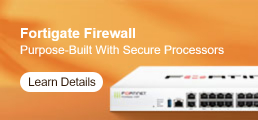
Unlike CPU-based firewalls, Fortinet uses purpose-built ASIC hardware.
Result:
- Security features don’t cripple performance
- Lower latency under load
- Better energy efficiency (~38W average)
Real Throughput That Holds Up
- ~3 Gbps SSL inspection
- ~3.1 Gbps NGFW throughput
- Up to 35 Gbps IPsec VPN
This matters because these numbers are usable performance, not theoretical max.
Built-In Modern Architecture
- SD-WAN included
- ZTNA (Zero Trust) built-in
- Unified OS (FortiOS)
Part 3: SonicWall vs FortiGate
Below is a practical comparison based on real-world usage.
| Area | SonicWall (Legacy) | FortiGate 120G |
| SSL Inspection | Performance drops | High-speed, stable |
| VPN Experience | Bottlenecks common | Scales smoothly |
| Security Visibility | Limited | Deep inspection |
| Architecture | Add-on heavy | Integrated |
Part 4: Migration Risk
Common Concerns
- Will this break VPN?
- How long will we be down?
- Do we have to rebuild everything?
These concerns are valid, but manageable with proper planning.
Part 5: Migration Approaches
Automated Migration
- Converts policies
- Migrates NAT rules
- Reduces manual errors
Clean Rebuild
- Rebuild policies from scratch
- Remove legacy clutter
- Adopt modern architecture
Part 6: Safe Migration Strategy
- Audit existing SonicWall config
- Deploy FortiGate in parallel
- Test policies before cutover
- Schedule migration during low traffic
- Keep rollback ready
With this approach, downtime can often be reduced to minutes.
Part 7: Hardware Supply Risk
Common Issue
Projects get delayed due to hardware availability.
Practical Solution
Teams often avoid delays by sourcing from suppliers with ready stock.
For example, platforms like Router-switch offer global inventory and fast delivery options.
You can also compare pricing and availability via IT-Price to optimize procurement decisions.
Part 8: Real-World Example
A logistics company (~180 users) migrated from SonicWall to FortiGate 120G:
- VPN performance improved 3×
- Latency reduced by ~40%
- SSL inspection enabled without slowdown
- Migration completed within 48 hours
Part 9: When It’s Not the Right Fit
- <100 users → consider smaller models
- >300 users → consider higher-end models
Choosing the right size matters more than brand.
Part 10: Final Verdict
If you're seeing:
- Performance degradation
- Security limitations
- Increasing operational costs
Then upgrading is no longer optional.
The FortiGate 120G represents a strong balance of performance, security, and long-term value for mid-sized organizations.
Part 11: FAQ
Is FortiGate better than SonicWall for 200 users?
In most modern environments, yes—especially with SSL inspection and VPN-heavy workloads.
How long does migration take?
Typically 1–2 days with proper planning.
Can downtime be avoided?
It can be minimized to minutes with parallel deployment.
What’s the biggest migration risk?
Hardware availability and timing are often the biggest risks.

Expertise Builds Trust
20+ Years • 200+ Countries • 21500+ Customers/Projects
CCIE · JNCIE · NSE7 · ACDX · HPE Master ASE · Dell Server/AI Expert