Solving Warehouse WiFi Coverage and Uptime IssuesDesign reliable warehouse WiFi coverage and uptime with warehouse wifi 6 ap, industrial wireless access points, and warehouse poe switches for racks and docks.
OLT Capacity Planning for GPON Access NetworksPlan OLT capacity for GPON OLT systems and EA5800 capacity planning, optimizing GPON split ratio and OLT uplink design for scalable fiber access.
Enterprise OLT Platform Selection for Fiber AccessDesign enterprise OLT platform strategy for GPON OLT platform, modular OLT chassis, and OLT service boards to scale passive optical LAN and XG-PON evolution.
Scale Data Center Networking Under Long Lead TimesScale data center networking faster under long lead times with data center spine switches, leaf spine data center designs and Cisco UCS fabric interconnects.
Tunnel Video Surveillance VLAN Stability over FiberDesign stable tunnel video surveillance VLANs using optical transport backbone and Arista fiber aggregation for resilient Huawei OptiX OSN CCTV networks.
Fiber vs Copper in Industrial Networks Design GuideCompare fiber vs copper in industrial ethernet, plan hybrid industrial fiber network designs, and select rugged ethernet switches and industrial SFP transceivers.
Part 1: What is a Firewall and Why Your Small Business Needs One
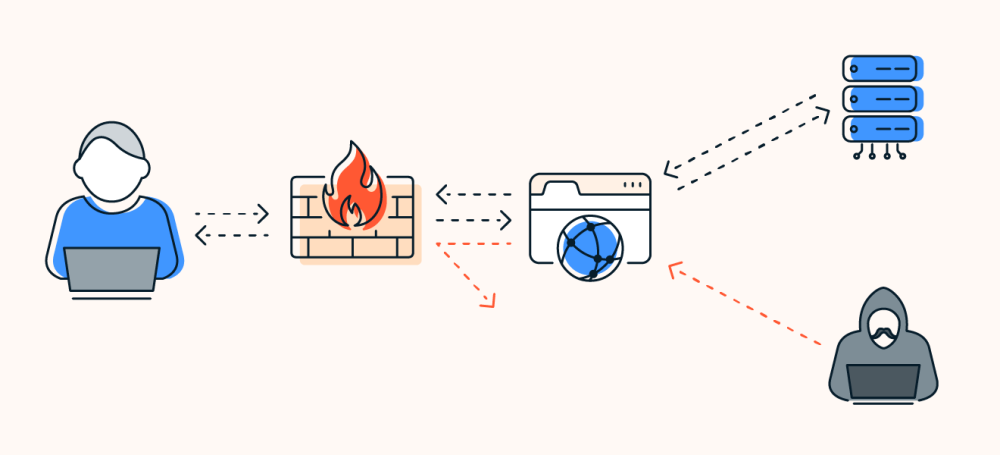
A firewall is a network security device that monitors all incoming and outgoing network traffic, applying security rules to determine whether to allow or block data packets. Its primary purpose is to establish a barrier, preventing harmful traffic like viruses and hackers from infiltrating your network from external sources, such as the internet, while permitting legitimate traffic to flow.
Do Small Businesses Need a Firewall?
Absolutely, small businesses unequivocally need a firewall. The internet is rife with dangers, and small and medium-sized enterprises (SMBs) have become prime targets for cybercriminals. Without a robust firewall device, unauthorized users, or "threat actors," can gain access to confidential business information. Firewalls act as an essential barrier between your internal network and the broader internet, preventing unauthorized external access and allowing businesses to control access to certain external websites. Investing in a firewall is a proactive measure that enhances your company's overall security posture, reduces cyber threat risks, and ensures business continuity.
Part 2: Hardware vs. Cloud Firewall: Understanding Your Options
When considering the best firewall for small business, you'll encounter two primary categories: hardware and software firewalls, alongside more modern cloud-based solutions.
Hardware Firewall for Small Business: This is a physical device positioned between your network and the internet gateway. Hardware firewalls protect all computers on your network and are generally easier to administer than individual software firewalls. Many top-tier recommended firewall for small business options fall into this category.
Software Firewall: An application installed directly on individual computers, controlling traffic via port numbers and applications. While effective for single devices, deploying and maintaining software firewalls across an entire company network can be expensive and complex.
Cloud Based Firewall for Small Business: These are cloud-native network firewall security services that offer unrestricted scalability and centralize policy management for all users and traffic, regardless of location. They provide advanced cloud security and cutting-edge firewall controls to any user, anywhere, across all protocols and ports, with no hardware required. Examples include Azure Firewall and Zscaler Cloud Firewall.
The ideal firewall solution for a small business often integrates a hardware firewall with software controls, offering a comprehensive security solution that includes VPN support, antivirus, antispam, antispyware, and content filtering capabilities.
The Benefits of a Robust Firewall Solution
Support for changing business needs: Safely deploy new applications with advanced application-layer security for email, VoIP, video, and multimedia.
Controlled access: Block unauthorized access to applications or information assets.
Increased employee productivity: Prevent loss of productivity and valuable data by blocking hackers.
Improved business resiliency: Prevent disruptions to critical applications and services caused by security breaches.
Part 3: Types of Firewalls You Should Know
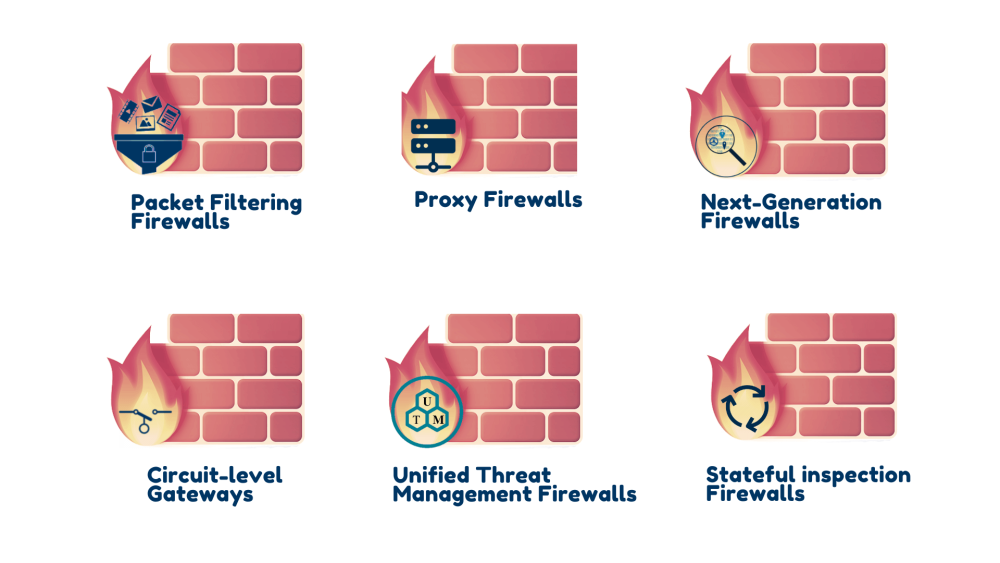
Packet Filtering Firewalls: Examine individual data packets against a set of rules, allowing or denying them based on source, destination, port, and protocol.
Proxy Service Firewalls: Act as an intermediary for network requests from clients seeking resources from other servers.
Stateful Inspection Firewalls: Monitor the state of active connections, making decisions based on the context of traffic rather than just individual packets.
Next-Generation Firewalls (NGFW): Offer deeper inspection capabilities, application awareness, intrusion prevention systems (IPS), and threat intelligence integration. Many of the best firewall for small business today are NGFWs.
Network Address Translation (NAT) Firewalls: Translate private IP addresses to public ones, hiding internal network structure from external view. While NAT is a routing function, it provides a layer of obscurity that can complement security.
Unified Threat Management (UTM) Firewalls: Combine several security features (like firewall, IPS, antivirus, anti-spam, web filtering) into a single device or service.
Part 4: How to Choose the Best Firewall for Your Small Business in 2025
Selecting the correct firewall device is crucial, as inadequate protection can leave your business vulnerable. Consider the following factors when choosing a recommended firewall for small business:
Size of your team and network: How many users and devices will be connected?
Distribution of workers: Are your employees primarily on-site or remote, requiring VPN capabilities?
Manageability and ease of use: The firewall should be manageable without extensive technical knowledge.
Skill level of your in-house IT team: Does your team have the expertise to configure and maintain complex systems?
Types of devices protected: Beyond traditional IT, are you protecting Operational Technology (OT) or Internet of Things (IoT) devices?
Required features: Consider advanced features like intrusion detection and prevention, content filtering, malware analysis, and secure SD-WAN.
Your company’s budget: Balance quality investment with affordability. Remember, security is an investment, not just a cost.
Part 5: Recommended Firewall Devices for Small Business in 2025
Here are some of the most highly-regarded and recommended firewall for small business in 2025, offering a balance of security, ease of use, and cost-effectiveness:
Firewall Vendor/Model
Key Features for SMBs
Type
FortiGate Next Generation Firewall (NGFW)
Most deployed network firewall, offering AI/ML-powered security, unified management via FortiManager or FortiGate Cloud, and strong performance even with UTM features enabled. Models like the 40F and 70F are popular for SMBs. Excellent for securing remote offices, campuses, and cloud environments.
Robust threat detection (Cisco Talos), easy to configure and manage, and improved hybrid work performance. Meraki MX series offers cloud-managed security and SD-WAN for various client counts, from small branches to larger sites. Integrates hardware firewall with software controls.
Dominates the NGFW market it created. Features application-based policy enforcement, unique User-ID for policy configuration, excellent malware analysis (WildFire), and centralized management (Panorama). Known for its robust security infrastructure and policy administration interface.
Comprehensive next-generation firewall protection with deep learning and synchronized security. Offers Unified Threat Management (UTM), high-performance IPS and ATP, flexible SD-WAN and VPN, and Xstream Deep-Packet Inspection. Can react to security incidents by isolating compromised computers.
Designed for companies with 250+ users, utilizing deep learning for real-time breach detection and prevention. The TZ series (e.g., TZ270, TZ370) are frequently recommended for SMBs, offering advanced security with ease of deployment. Provides protection against ransomware and attacks on non-standard ports.
Flexible hardware firewall solutions with top-notch technology for safeguarding networks. Used for vulnerability management, routing, multi-factor authentication, and network segmentation. Offers enterprise-grade security, centralized management via WatchGuard Cloud, built-in SD-WAN, and Intrusion Prevention Service (IPS).
Hardware
Azure Firewall
Cloud-native, intelligent network firewall security service offering best-in-class threat prevention for Azure-hosted cloud workloads. Features unrestricted cloud scalability, application FQDN filtering, SNAT/DNAT support, multiple public IPs, and Azure Monitor logging.
Cloud
Zscaler Cloud Firewall
A fully cloud-based firewall for small businesses that requires no hardware. Offers comprehensive, integrated control over outbound TCP, UDP, and ICMP traffic. Provides advanced cloud security and firewall controls to any user, anywhere, across all protocols and ports. A comprehensive cloud-native zero trust platform.
Cloud
pfSense / OPNsense
Open-source network firewalls built on FreeBSD Linux. Known for their user-friendly web interface and customization capabilities. Features include Stateful Packet Inspection (SPI), GeoIP filtering, Captive Portal Guest Network, NAT mapping, and connection limits. Can be installed on various hardware or as a VM, offering advanced features at a potentially lower cost.
Software/DIY
Firewalla
User-friendly and feature-packed, designed for the small business market. Offers accessible cybersecurity solutions that are simple, affordable, and powerful, helping to shield your business and manage online activity.
Hardware
Ubiquiti (UniFi)
Offers an attractive UI and robust features for a lower cost compared to enterprise-grade solutions. UniFi Dream Machine Pro (UDM Pro) acts as an IPS/IDS and firewall, offering centralized management of Wi-Fi and switching. While some argue its firewall capabilities are basic, it can be adequate for very small businesses with no open ports to the internet.
Hardware
Part 6: Making an Informed Decision: Your Next Steps
Choosing the right firewall for small business is an investment in your company’s future. It’s about more than just blocking threats; it’s about enabling secure growth and maintaining peace of mind.
Assess Your Needs: Re-evaluate your team size, remote work setup, IT capabilities, and budget using the factors outlined above.
Research Products: Explore detailed specifications and reviews for the recommended firewall for small business options listed.
Consult Experts: If you’re unsure, seek guidance from cybersecurity professionals who can help tailor a solution to your specific environment.
Check Real-Time Prices and Availability! Ready to secure your business? Check real-time prices and availability on Router-switch to find the perfect firewall to protect your digital assets in 2025.
Understanding firewall types, benefits, and specific product capabilities enables IT managers to make informed, confident decisions. Exploring these options through platforms like Router-switch allows you to compare real-time specifications, review features, and find the solution best suited to your business context—all while keeping security and operational efficiency aligned.
Frequently Asked Questions (FAQs)
Q1: What is the best firewall for small business?
The "best" firewall depends on your specific business needs, including network size, budget, IT team's skill level, and required features. Top contenders often include FortiGate (e.g., 40F/60F/70F), Cisco Meraki MX, Palo Alto Networks PA-Series, Sophos Firewall, and SonicWall TZ series. For cloud-native options, Azure Firewall and Zscaler Cloud Firewall are highly regarded. Open-source solutions like pfSense also offer powerful features for those with technical expertise.
Q2: Do small businesses need a firewall?
Yes, absolutely. Small businesses are increasingly targeted by cybercriminals, and a firewall serves as a crucial barrier to prevent unauthorized access to confidential information, block harmful traffic, and improve overall network security. It's a foundational component of any comprehensive cybersecurity strategy.
Q3: How much does a firewall cost for a small business?
Firewall costs for small businesses can vary significantly based on the type, features, and vendor. Basic hardware firewalls or open-source solutions running on dedicated hardware might start from a few hundred dollars (e.g., a FortiGate 40F for ~$693.05 or SonicWall TZ270 for ~$395, with higher costs for security service subscriptions). Next-generation firewalls with advanced features and subscription services (for threat intelligence, updates, and support) can range from a few hundred to several thousand dollars annually. Cloud-based firewalls typically operate on a subscription model, offering scalability without upfront hardware costs.
Q4: What is the golden rule of firewall?
While there isn't one single "golden rule" universally codified, a core principle, often implied as the "golden rule" in firewall management, is "Implicit Deny." This means that all traffic is denied unless explicitly allowed. This approach ensures that only necessary and authorized communications are permitted, significantly reducing the attack surface. It's a fundamental aspect of a "defense-in-depth" strategy, where multiple layers of security are applied to protect against threats.
Secure your business’s future today. With the complexities of modern cyber threats, complete protection isn't achievable through a single solution. Router-switch offers a 360° approach to cybersecurity, backed by established industry experts. Our team understands the evolving nature of firewalls and can help you select a solution that perfectly matches your business’s size, scope, and budget.
Expertise Builds Trust
20+ Years • 200+ Countries • 21500+ Customers/Projects CCIE · JNCIE · NSE7 · ACDX · HPE Master ASE · Dell Server/AI Expert